



Engineering and manufacturing
Custom Magnetic Assemblies: Drawing, Interfaces and Inspection
Custom magnetic assemblies should be reviewed as finished systems, not as a magnet plus a housing. Elite Magnets connects the required field, force, torque, waveform, or sensing result with the magnet, steel circuit, shaft, sleeve, adhesive, air gap, retention, magnetization state, assembly sequence, inspection evidence, and repeat-production release plan.

01Application and drawing review before pricing
02Material, geometry, coating, and magnetization aligned
03Prototype evidence connected to repeat production
Overview
Develop the magnet, circuit, interfaces, and release evidence as one production route.
A useful assembly review begins with the finished product result and works backward through the magnetic circuit, mechanical interfaces, environment, magnetization, process sequence, inspection, quantities, and acceptance evidence. The proposed route remains conditional until the actual drawing and project requirements are reviewed.
01
Engineering review
Connect the magnetic result, mechanical interfaces, environment, and drawing revision before choosing a route.
02
Manufacturing feasibility
Check geometry, brittle-material limits, coating build, tolerances, and the process route against the finished part.
03
Production planning
Clarify prototypes, annual volume, packaging, traceability, change control, and the evidence needed for release.
04
Quality evidence
Agree dimensional, magnetic, surface, and program evidence together with sampling and acceptance boundaries.

Manufacturability review
Solve the hard questions before they become tooling problems.
The earlier we can see the product, assembly, environment, and performance target together, the more freedom there is to improve geometry, tolerance, protection, magnetization, and process economics.
- 2D drawing and 3D model review
- Magnetic target and operating temperature
- Route-specific tolerance, equipment, and tooling confirmation
- Prototype quantity, annual demand, and available capacity review
- Inspection method, documentation, and evidence available for the selected route
Engineering guides
Turn the next technical question into a clear decision.
Magnetization Direction and Patterns
Plan pole direction, multipole fixtures, assembly state, and magnetic verification before the design is frozen.
Read the guidePermanent Magnet Dimensional Tolerances
Review functional datums, coating state, geometry, process route, and measurement method as one DFM decision.
Read the guideCustom Magnet Drawing Checklist
Connect material intent, datums, coating, magnetization, inspection, quantities, and revision control before an RFQ is released.
Read the guideNeodymium Magnet Grades
Use grade names as a starting point, then confirm the magnetic circuit, temperature margin, geometry, and demagnetization risk.
Read the guideWorking process
A clear path from open question to stable production.
Every project is different, but the work should always move forward through visible decisions and evidence.
Requirement review
Application, magnetic target, environment, drawing, and volume are checked together.
Route proposal
Material, grade family, process, coating, and magnetization approach are defined.
DFM alignment
Critical dimensions, tolerances, assembly interfaces, and measurable acceptance criteria are agreed.
Prototype build
Samples are produced with a documented inspection route and open technical feedback.
Validation
Dimensional, magnetic, coating, appearance, and application feedback are closed before release.
Repeat production
Control plan, packaging, traceability, and change communication support recurring supply.
Decision gates
Know what must be true before the project moves forward.
This gate structure shows what we need, what you receive, and the decision that closes each stage. It is a review framework, not a promise that every route, tolerance, test, capacity, price, MOQ, or lead time is available.
| Stage | Inputs we need | Outputs you receive | Decision gate |
|---|---|---|---|
| Requirement review | Application, environment, magnetic target, drawing or model, volume, and timing | Feasibility questions and preliminary route | Is the magnetic and mechanical objective clear enough? |
| Route proposal | Material constraints, geometry, coating, corrosion, and temperature exposure | Material and process route with trade-offs | Does the route fit performance and production intent? |
| DFM alignment | Interfaces, tolerances, assembly sequence, and inspection limits | DFM comments and acceptance framework | Are critical dimensions and measurable criteria agreed? |
| Prototype build | Approved review route, sample quantity, and handling constraints | Samples, inspection summary, and open points | Do samples answer the intended engineering question? |
| Validation | Test plan, assembly feedback, and application limits | Dimensional, magnetic, coating, and release evidence | Is the part ready for a production commitment? |
| Repeat supply | Volume forecast, packaging, documentation, and change rules | Control plan, traceability, and repeat-order route | Are capacity, quality, and communication controls stable? |
Production controls
Every step protects the performance designed into the part.
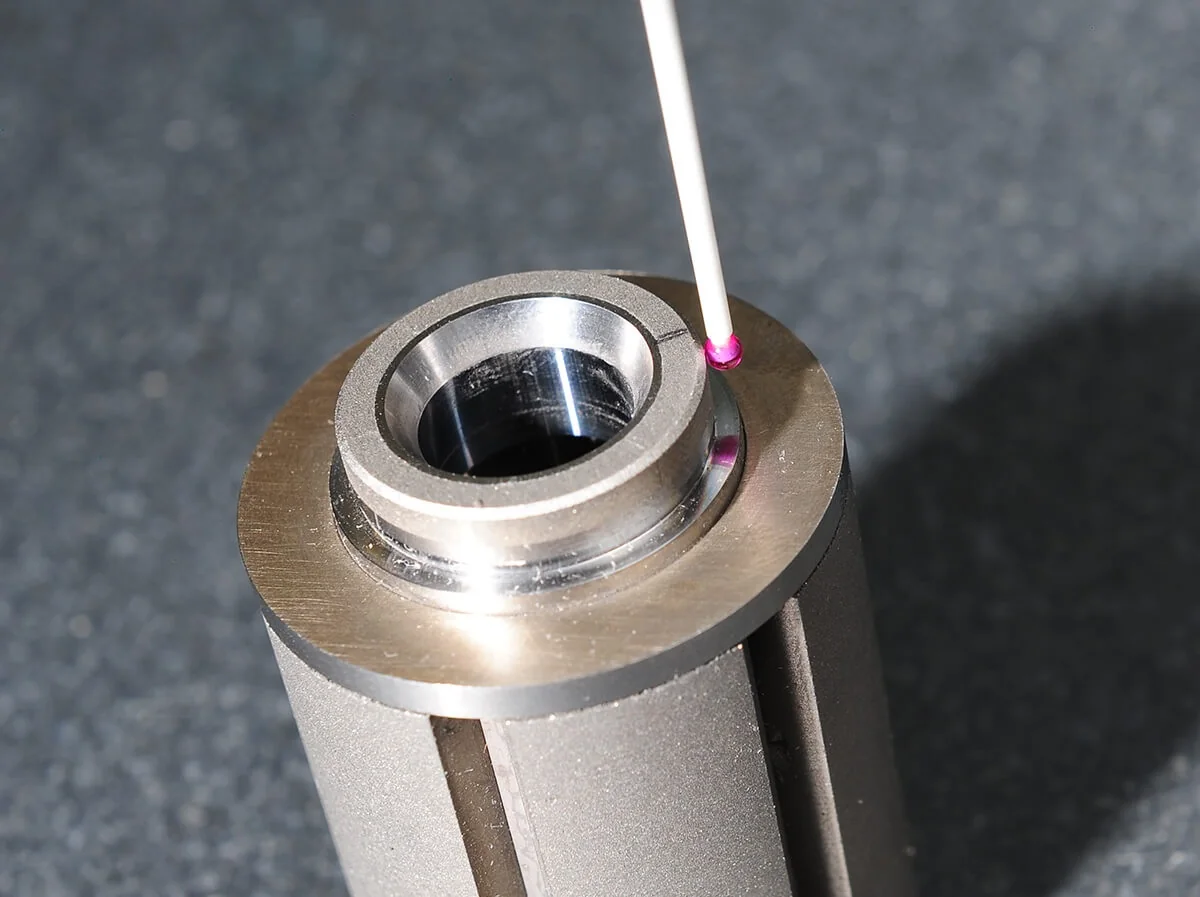
Dimensional inspection
Critical dimensions and inspection methods are agreed around the functional interface.
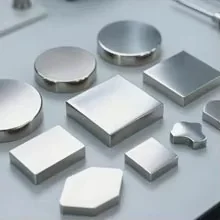
Surface protection
Coating selection is reviewed against corrosion, bonding, cleanliness, and dimensional build.
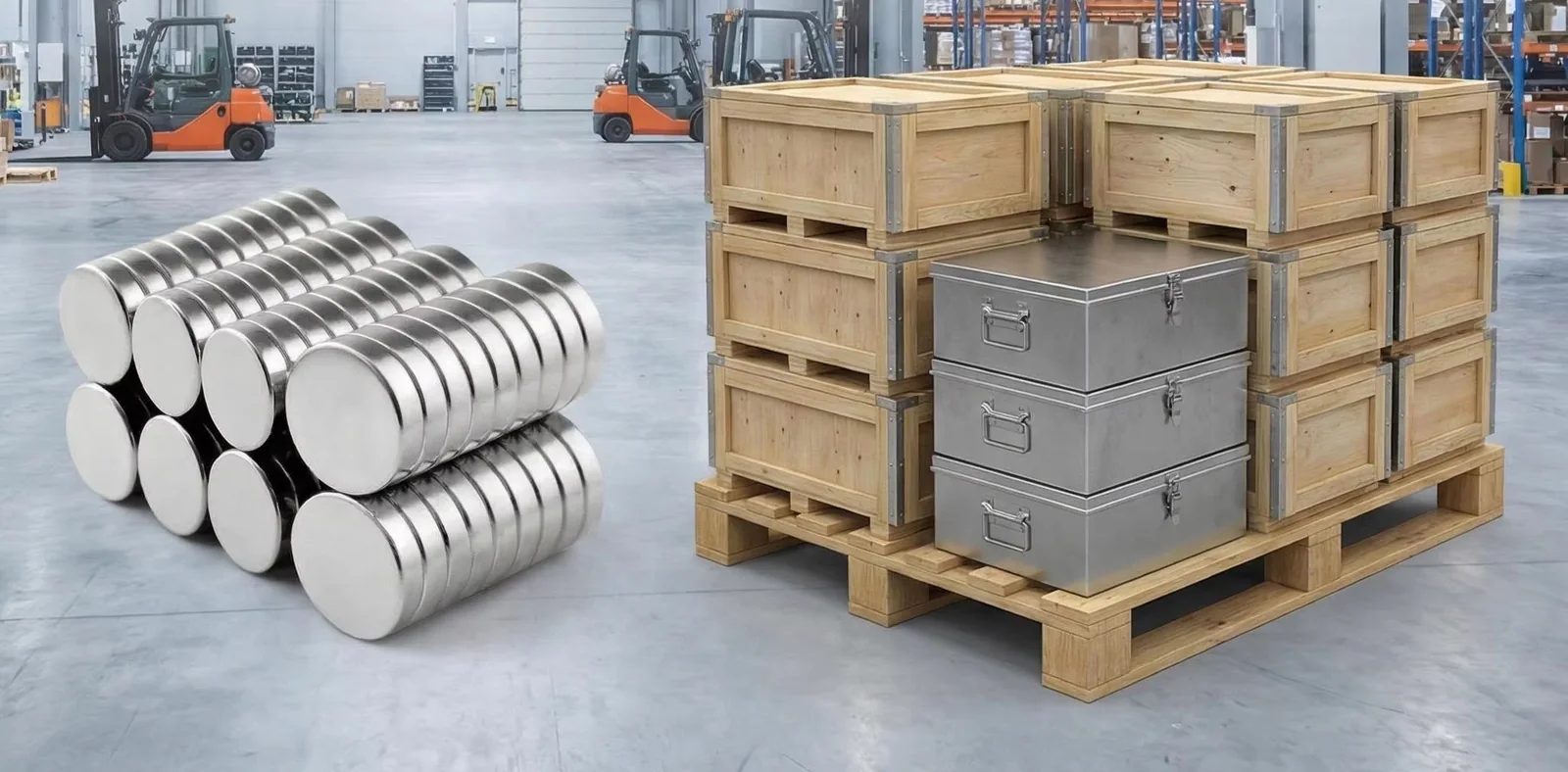
Production delivery
Packaging and handling are designed to protect brittle, coated, and magnetized parts in transit.
Technical reference
Magnetic assembly interface and inspection worksheet.
This original evidence block makes the assumptions behind a magnetic assembly visible. It is a review framework, not a claim that every assembly route, balancing method, process, test, tolerance, capacity, price, MOQ, or lead time is available.
| Review layer | Input to define | Evidence before release |
|---|---|---|
| Finished function | Field, force, torque, waveform, sensing, holding, or motion result at a defined position and temperature | Calculation or model assumptions plus representative functional measurement |
| Magnetic circuit | Magnet material, geometry, polarity, air gap, steel return path, leakage, saturation, and neighboring fields | Controlled model, drawing, approved material data, and magnetic measurement plan |
| Mechanical interfaces | Shaft, sleeve, housing, adhesive, press fit, datums, runout, balance, loads, and assembly sequence | Tolerance stack, DFM review, assembly trial, and retention evidence where required |
| Magnetization state | Before or after assembly, pole count, pitch, physical reference, orientation mark, and delivery condition | Fixture feasibility and reproducible polarity, scan, field, flux, waveform, or functional inspection |
| Production release | Prototype and annual quantity, critical characteristics, sampling, traceability, packaging, and change control | Approved drawing, inspection plan, sample evidence, open-issue closure, release responsibility, and agreed commercial assumptions |
FAQ
Custom magnetic assembly questions
What is a custom magnetic assembly?
It is a controlled combination of one or more magnets with components such as steel, a shaft, sleeve, housing, adhesive, fastener, or molded interface, designed to produce a defined magnetic and mechanical result.
What information is needed for a magnetic assembly review?
Provide the useful magnetic target, drawing and model, circuit and air gap, interfaces and loads, operating environment, magnetization state, assembly sequence, inspection requirements, quantities, timing, and release evidence.
Should the assembly be magnetized before or after assembly?
There is no universal answer. The choice affects handling, fixture feasibility, steel and neighboring components, safety, pole accuracy, adhesive or thermal process exposure, and the final inspection method.
How are custom magnetic assemblies inspected?
The inspection plan can combine dimensional, polarity, field, flux, waveform, force, torque, runout, balance, retention, appearance, traceability, and functional checks according to the actual product risk and acceptance criteria.
Can price, MOQ and lead time be confirmed before drawing review?
Only project-specific commercial assumptions can be discussed before review. A controlled quotation depends on the actual material, geometry, interfaces, tooling, process, inspection, quantities, documentation, packaging, and qualification route.
Start a project
Have a requirement that does not fit a catalogue?
Bring us the drawing, the product goal, or simply the part of the design that is not working yet. We will help turn it into a practical next step.