



Samarium Cobalt Magnet Manufacturer for Custom OEM Parts
A samarium cobalt magnet manufacturer should review the useful magnetic result and operating envelope before selecting a SmCo route. For a custom OEM part, connect temperature, atmosphere, geometry, magnetic circuit, magnetization, brittle-part handling, assembly, inspection, prototype and annual quantities, and release evidence. A material family or grade alone does not establish finished performance, feasibility, price, MOQ, or lead time.
MaterialSamarium cobalt, SmCo5 or Sm2Co17
ProcessSintered rare earth magnet
ShapesBlocks, discs, rods, rings, arcs, segments
Main reasonTemperature stability and corrosion resistance
Product
Custom SmCo parts reviewed around the operating function and evidence.
Sintered SmCo is screened when heat, magnetic stability, environment, or coating-related air-gap constraints make it a serious candidate. A manufacturer review should connect the requested function to the material and geometry, magnetic circuit, brittle-part handling, magnetization route, assembly interfaces, inspection method, quantities, and controlled release evidence.
Review custom magnetic engineering and assembly capabilities
Excellent temperature stability
Strong corrosion resistance
Reliable output over long service cycles
Where it earns its place
- The magnet must operate at higher temperature than a standard NdFeB route can support.
- Corrosion exposure or coating avoidance is a meaningful design factor.
- The assembly needs stable output in motors, sensors, actuators, or industrial equipment.
- The part geometry can account for brittle material handling and edge protection.
What the design must manage
- SmCo can be brittle and needs careful mechanical handling.
- Magnetization may require stronger fields and should be confirmed early.
- SmCo is usually selected for stability, not lowest material cost.
- Geometry, assembly pressure, and inspection method should be validated before sampling.
SmCo manufacturer review input card
Use one controlled input set so engineering, sourcing, quality, and the manufacturer review the same magnetic function, operating envelope, integration, and program evidence.
| Review layer | Buyer input | Evidence to request |
|---|---|---|
| Magnetic function | Required result at a defined position and temperature. | Approved material data plus circuit or model assumptions and a functional test plan. |
| Operating envelope | Continuous, peak, fault, assembly, and storage temperature; atmosphere and exposure. | Project-specific material and geometry review with stated validation conditions. |
| Mechanical integration | Geometry, brittle edges, retention, adhesive, sleeve or housing, and assembly loads. | Drawing and DFM review plus a controlled assembly and inspection plan. |
| Magnetization and inspection | Direction, pole reference, delivery state, field characteristic, and measurement location. | Fixture and route review with a reproducible acceptance method. |
| Program conditions | Prototype quantity, annual demand, timing, traceability, change control, and continuity. | Comparable commercial scope and production-release evidence. |
Specification
Stability that earns its place in severe environments.
SmCo grade selection starts with the operating temperature and the required magnetic stability. SmCo5 and Sm2Co17 routes support different output and temperature profiles, while geometry, edge protection, and stronger magnetizing fields should be planned early.
Specification should start from temperature, environment, and stability target.
| Material system | Sintered SmCo; SmCo5 or Sm2Co17 selected by output, temperature, and geometry. |
|---|---|
| Typical forms | Blocks, discs, rods, rings, arcs, segments, and custom machined shapes. |
| Surface protection | Often used without coating, but exposure, cleanliness, and assembly handling still need review. |
| Magnetization | Axial, diametrical, radial, or fixture-dependent direction depending on the design. |
| Engineering risk | Brittle edges, higher magnetizing field, cost target, and mechanical stress during assembly. |
Technical Data
Sintered SmCo grade reference bands.
The table frames the choice between SmCo5 and Sm2Co17 routes. The selected grade specification becomes the production control reference for the final part.
| Grade / Route | Br (T) | Hcj (kA/m) | BHmax (kJ/m³) | Max temp. (°C) | Density (g/cm³) |
|---|---|---|---|---|---|
| SmCo5 16 | 0.80-0.90 T | >=1200 kA/m | 120-145 kJ/m3 | 250 C | 8.3 g/cm3 |
| Sm2Co17 24 | 1.00-1.08 T | >=1200 kA/m | 175-199 kJ/m3 | 300 C | 8.3 g/cm3 |
| Sm2Co17 28 | 1.05-1.12 T | >=1200 kA/m | 205-223 kJ/m3 | 300 C | 8.3 g/cm3 |
| Sm2Co17 28H | 1.03-1.10 T | >=1990 kA/m | 205-223 kJ/m3 | 350 C | 8.3 g/cm3 |
Use SmCo when thermal stability and environment risk justify the material route.
Forms and manufacturing scope
Precision forms for stable, demanding assemblies.
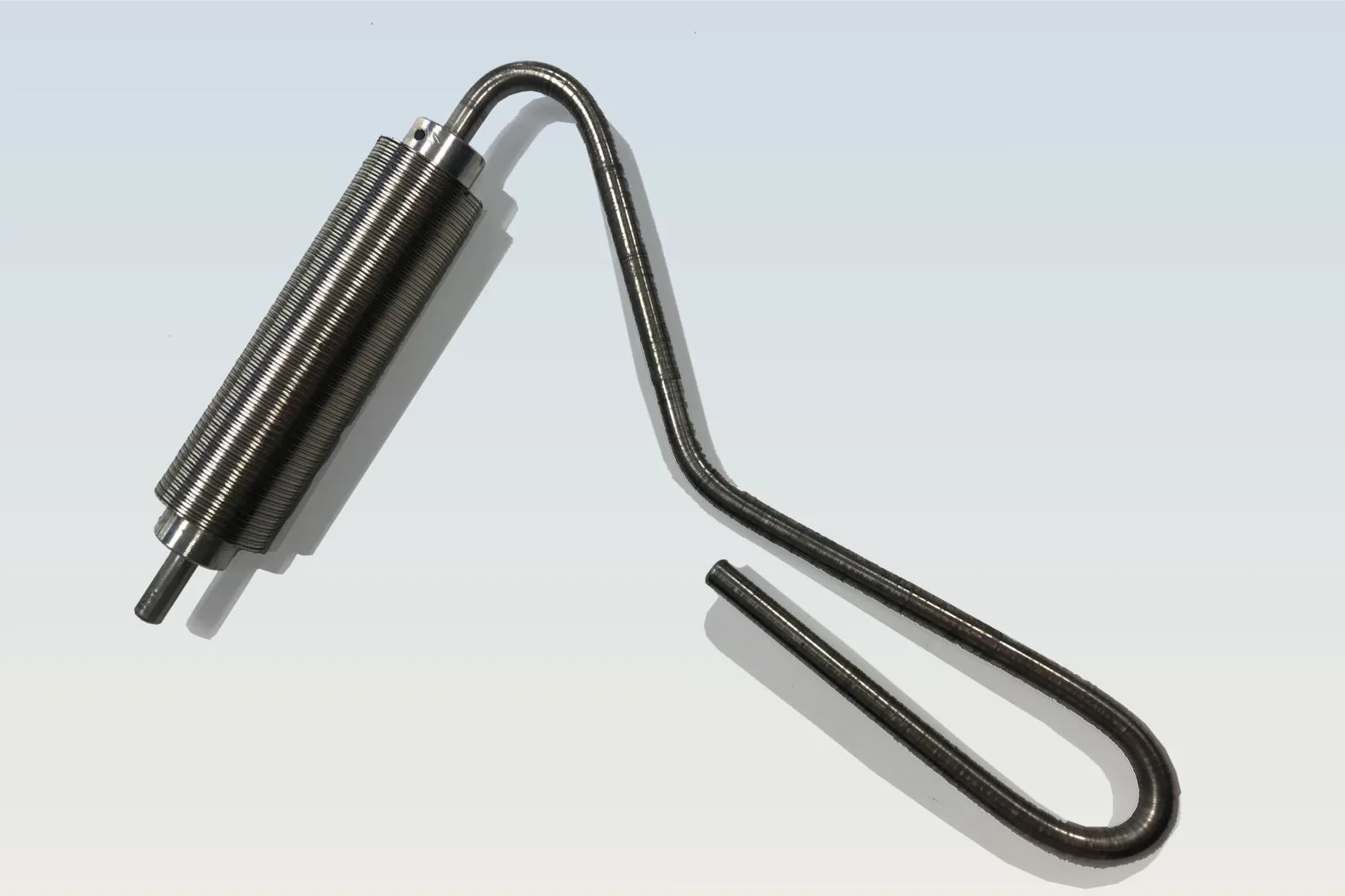
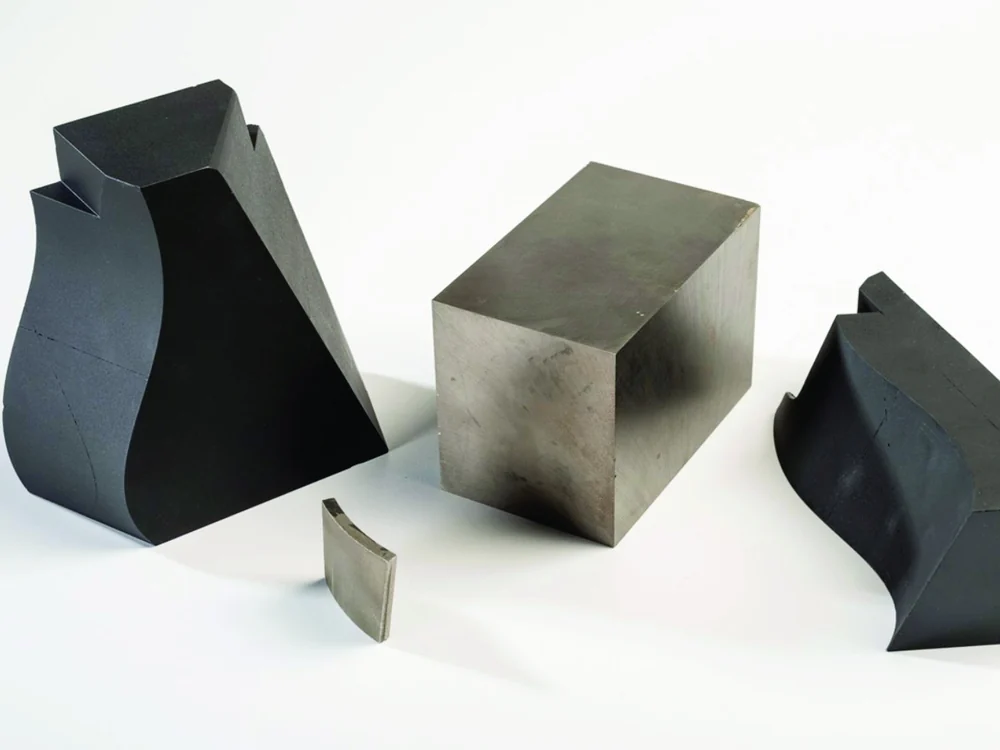
Blocks and plates
For high-temperature sensors, actuators, industrial assemblies, and compact fields.
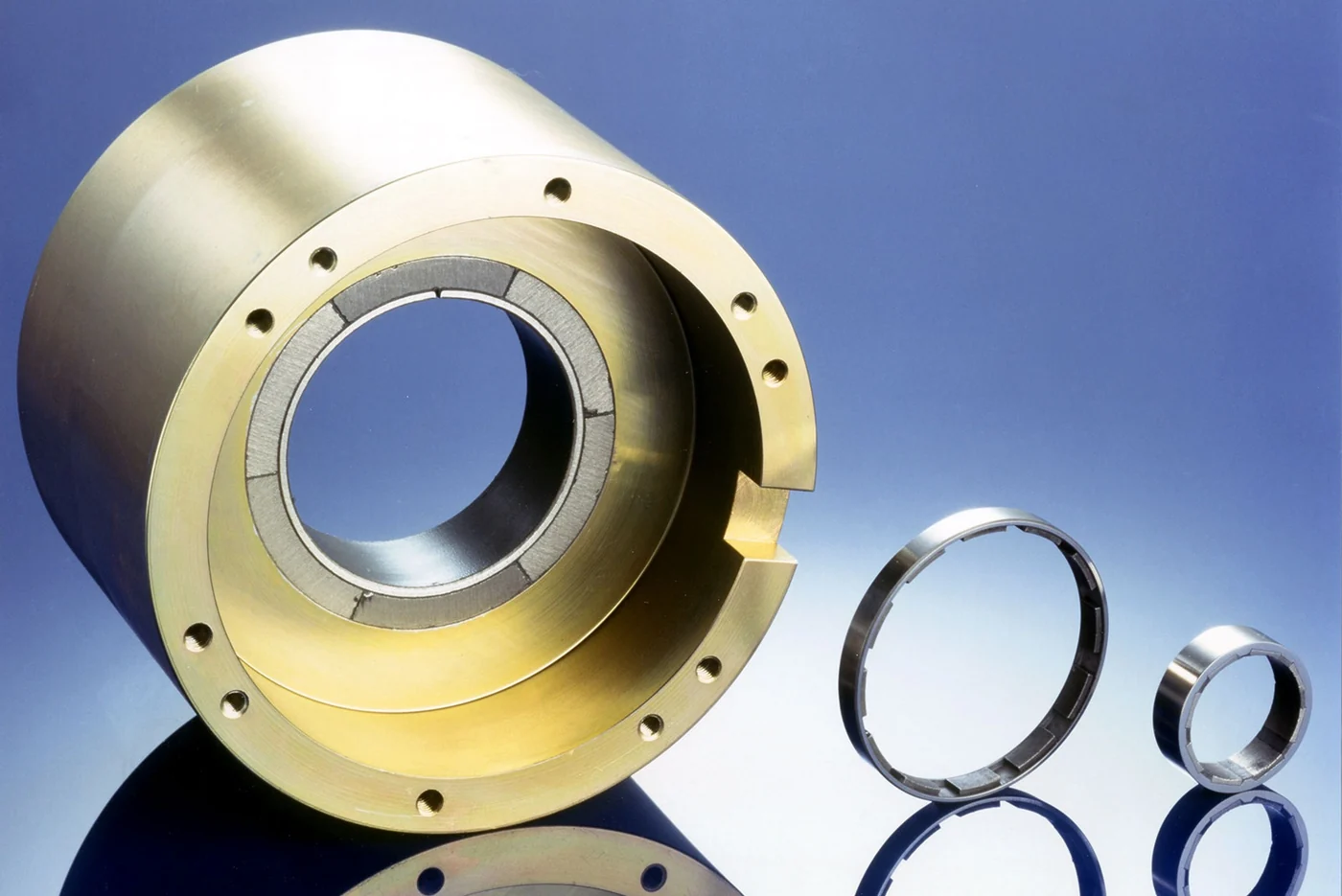
Rings
For coaxial assemblies, high-temperature motors, pumps, and encoders.
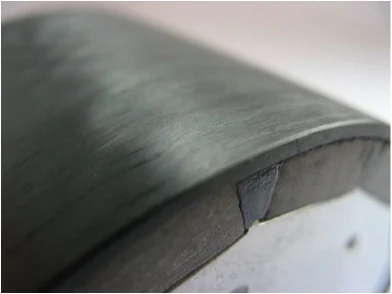
Uncoated routes
For applications where coating thickness or corrosion risk changes air gap performance.
Application examples
Where heat and harsh environments cannot be allowed to win.

High-temperature motors
Rotor and segment magnets where output must remain stable under heat.

Industrial sensors
Position and speed sensing where magnetic drift needs to be controlled.
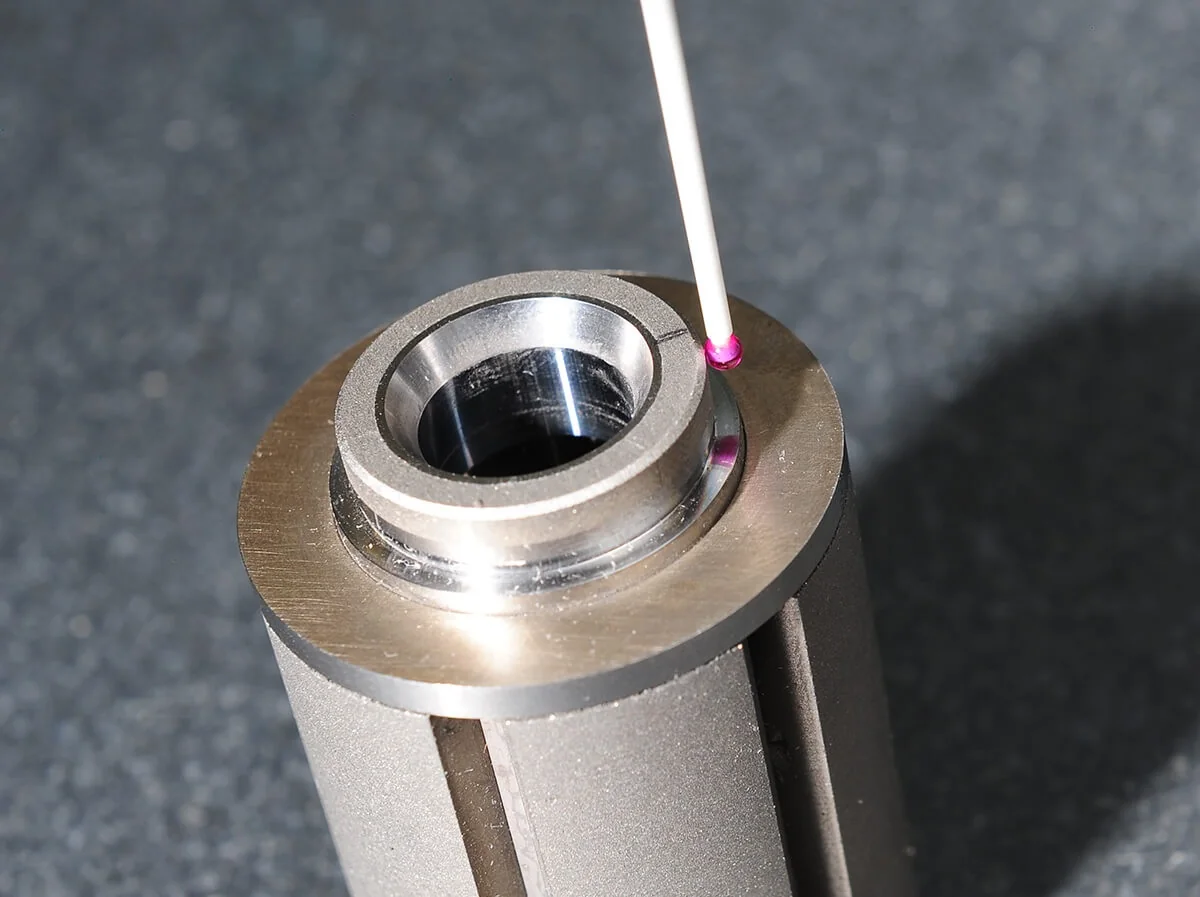
Actuators and equipment
Components exposed to heat, corrosion risk, or long service requirements.
Engineering guides
Resolve the decisions that shape this material route.
Use these guides before the drawing, grade, coating, magnetization, or inspection plan becomes expensive to change.
SmCo vs NdFeB Magnets
Compare the two rare-earth routes by temperature, corrosion, geometry, assembly, and validation risk.
Read the guideMagnet Coercivity Explained
Connect coercivity to the actual temperature, working point, reverse fields, geometry, and validation method.
Read the guidePermanent Magnet Dimensional Tolerances
Align brittle-part geometry, functional datums, assembly fit, and inspection before sampling.
Read the guideMagnet Quality Control and Inspection
Define dimensional, magnetic, appearance, traceability, and release evidence for the proposed part and assembly.
Read the guideFrequently asked questions
Samarium cobalt manufacturer and RFQ questions
What information does a SmCo manufacturer need first?
Start with the required field, force, torque, waveform, holding, or sensing result at a defined position and temperature. Add the drawing, circuit, operating envelope, magnetization, assembly, inspection, quantities, and release evidence.
Should SmCo5 or Sm2Co17 be selected from temperature alone?
No. Review the exact proposed material data with required output at use temperature, geometry, working point, adverse fields, atmosphere, machining and brittle-part risks, magnetization, assembly, supply, and validation.
Does Elite Magnets publish a standard MOQ, price, or lead time for custom SmCo parts?
No universal MOQ, price, or lead time is stated because material, geometry, machining, magnetization, inspection, quantity, packaging, tooling or fixtures, and production stage change the quotation and schedule.
What should be defined for SmCo magnetization and inspection?
Define direction, polarity or pole reference, delivery state, measurement characteristic, location, distance, fixture, temperature, sampling, records, and acceptance criteria so the drawing and release method use the same intent.
What evidence should support custom SmCo production release?
Use the controlled drawing and material data, approved samples, dimensional and magnetic inspection methods, assembly validation, traceability, packaging, change control, and the agreed functional evidence for the actual operating envelope.
Related product routes