



Assembly failure diagnosis
Magnet Adhesive Failure: Surface, Fit and Cure Questions
When a bonded magnet comes loose, first locate the failure plane: magnet or coating to adhesive, adhesive to substrate, cohesive failure inside the adhesive, coating separation, or brittle magnet damage. Then review surface condition, fit, bond-line control, cure or dwell, load direction, temperature, fluids and handling. A loose magnet does not by itself prove “bad glue” or loss of magnetism.
Contain the assembly and preserve the evidence
Stop mixing failed and unaffected parts. Record the part, assembly position, drawing revision, lot, process time, environment and event history. Preserve both mating surfaces, loose adhesive, coating flakes and magnet fragments. Cleaning the evidence before inspection can erase the failure boundary.
Magnet adhesive failure tree
| First observation | Possible path | Evidence to preserve | Do not conclude yet |
|---|---|---|---|
| Adhesive remains on substrate | Separation at magnet, coating or adhesive interface | Both surfaces, residue, coating condition and process record | “Wrong adhesive” |
| Adhesive remains on magnet | Separation at substrate interface | Substrate finish, cleaning, contamination and preparation | “Bad magnet coating” |
| Adhesive splits internally | Cohesive joint failure or overload | Bond line, cure/dwell, temperature and load history | Universal strength shortage |
| Coating or magnet leaves with adhesive | Coating separation, corrosion or brittle fracture | Flakes, fracture face, edges, environment and handling | Pure adhesive failure |
| Magnet moved but joint appears intact | Fit, gap, creep, fixture or assembly-load issue | Position records, tolerances, load direction and time history | Loss of magnetism |
| Magnetic function fell | Gap/alignment change or magnetic/material issue | Same-condition magnetic and dimensional comparison | Joint failure caused demagnetization |
Surface state includes the magnet coating and the real substrate
Review the delivered magnet surface, coating or treatment, cleanliness, damage, storage and handling. Review the actual production substrate—not a convenient laboratory coupon—including finish, texture, contamination and preparation. A preparation method suitable for one adhesive/substrate pair is not a universal process.
Fit and bond-line control can dominate the result
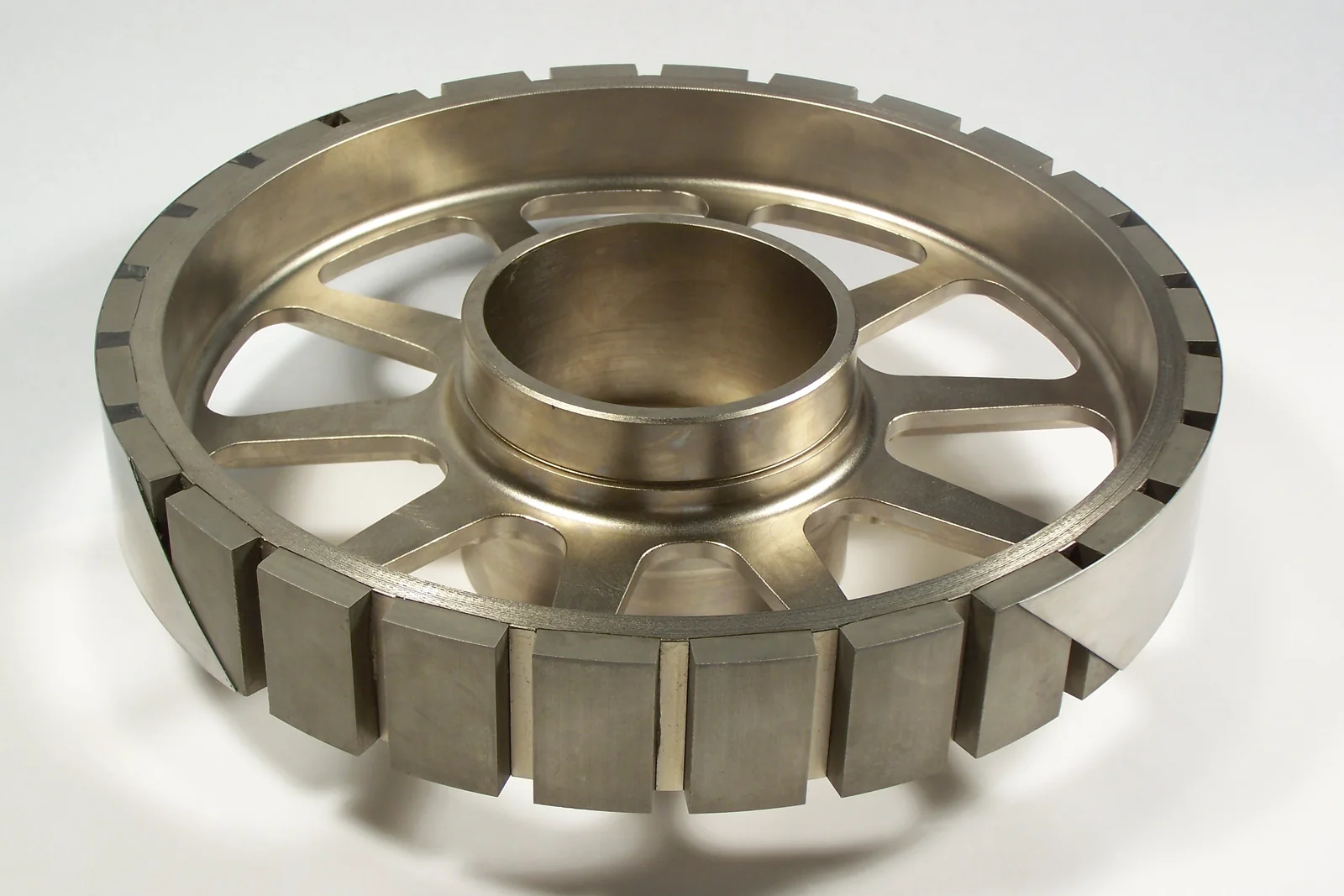
Interference, gaps, curvature, edge contact, fixtures and assembly location can change the adhesive layer. An uncontrolled gap can reduce alignment or add magnetic air gap. A press fit or clamp can damage a brittle magnet or coating and create a failure that looks adhesive-related.
Cure, dwell and handling belong to one process record
Record mixing, application, open time, assembly time, pressure or fixture, cure or dwell condition, release time and subsequent handling. The relevant variables depend on the approved adhesive system. Do not publish a generic cure time or assume full strength because the joint feels fixed.
Load mode and environment change the joint
Peel, cleavage, shear, impact, vibration, centrifugal load and thermal expansion can stress a joint differently. Temperature, cycling, moisture, fluids, cleaning and storage can affect the adhesive, substrate, magnet coating and nearby materials. The validation test must reproduce the important combination rather than one isolated exposure.
Separate retention failure from magnetic loss
A moved magnet changes gap, alignment and circuit position, which can reduce measured function without irreversible demagnetization. Brittle damage or corrosion can remove material. Heat or opposing fields can also affect the magnetic state. Compare dimensions, location and magnetic or functional measurements under the same setup before choosing a corrective action.
Evidence package for a joint review
- Drawing, assembly section, datum and magnet pole orientation.
- Magnet material, coating and delivered surface condition.
- Production substrate, finish, preparation and cleanliness controls.
- Adhesive identity, lot and complete application/cure/dwell record.
- Fit, gap, fixture, bond-line and assembly-force information.
- Load direction, temperature, cycling, fluids and event history.
- Failed, unaffected and reference parts with photographs and same-condition results.
Use the adhesive magnet selection guide, review Custom Capabilities and Quality, compare magnet product routes, or submit the evidence through the RFQ form.
Frequently asked questions
Why did the magnet come loose?
Possible paths include surface contamination, coating separation, substrate mismatch, bond-line or cure variation, peel or impact load, heat, fluids, fit problems or brittle damage. Locate the failure plane first.
What is the best adhesive for magnets?
There is no universal best adhesive. Selection depends on both surfaces, coating, gap, load mode, environment, process and representative validation.
Can smooth plated magnets be bonded?
A plated magnet may be bondable under an approved system, but the exact coating, cleanliness, preparation, adhesive and test must be reviewed. Do not assume from appearance.
Does adhesive failure mean the magnet demagnetized?
No. Movement can change the air gap or alignment. Compare the magnetic or functional result at the same geometry and condition before diagnosing demagnetization.
Can the loose magnet be cleaned and re-bonded?
There is no universal rework answer. Cleaning can change the coating, dimensions, traceability and joint surface. Reuse needs controlled disposition and validation.
Source and evidence boundary
Official adhesive guidance and first-party product/quality boundaries support the joint-variable framework. The Google SERP was noisy and forum-heavy; those posts and case claims were not used as technical proof.
Frequently asked questions
Why did the magnet come loose?
Possible paths include surface contamination, coating separation, substrate mismatch, bond-line or cure variation, peel or impact load, heat, fluids, fit problems or brittle damage. Locate the failure plane first.
What is the best adhesive for magnets?
There is no universal best adhesive. Selection depends on both surfaces, coating, gap, load mode, environment, process and representative validation.
Can smooth plated magnets be bonded?
A plated magnet may be bondable under an approved system, but the exact coating, cleanliness, preparation, adhesive and test must be reviewed. Do not assume from appearance.
Does adhesive failure mean the magnet demagnetized?
No. Movement can change the air gap or alignment. Compare the magnetic or functional result at the same geometry and condition before diagnosing demagnetization.
Can the loose magnet be cleaned and re-bonded?
There is no universal rework answer. Cleaning can change the coating, dimensions, traceability and joint surface. Reuse needs controlled disposition and validation.