



Failure analysis
Why Neodymium Magnets Rust: Causes, Diagnosis and Prevention
Direct answer: Sintered NdFeB magnets rust when moisture or aggressive chemicals reach susceptible material through a coating breach, pore, thin edge, damaged face, or trapped assembly interface. A brown deposit alone does not prove substrate corrosion. Preserve the part, identify the exposure path, and compare dimensional, magnetic, and assembly evidence before cleaning, reuse, recoating, or material change.
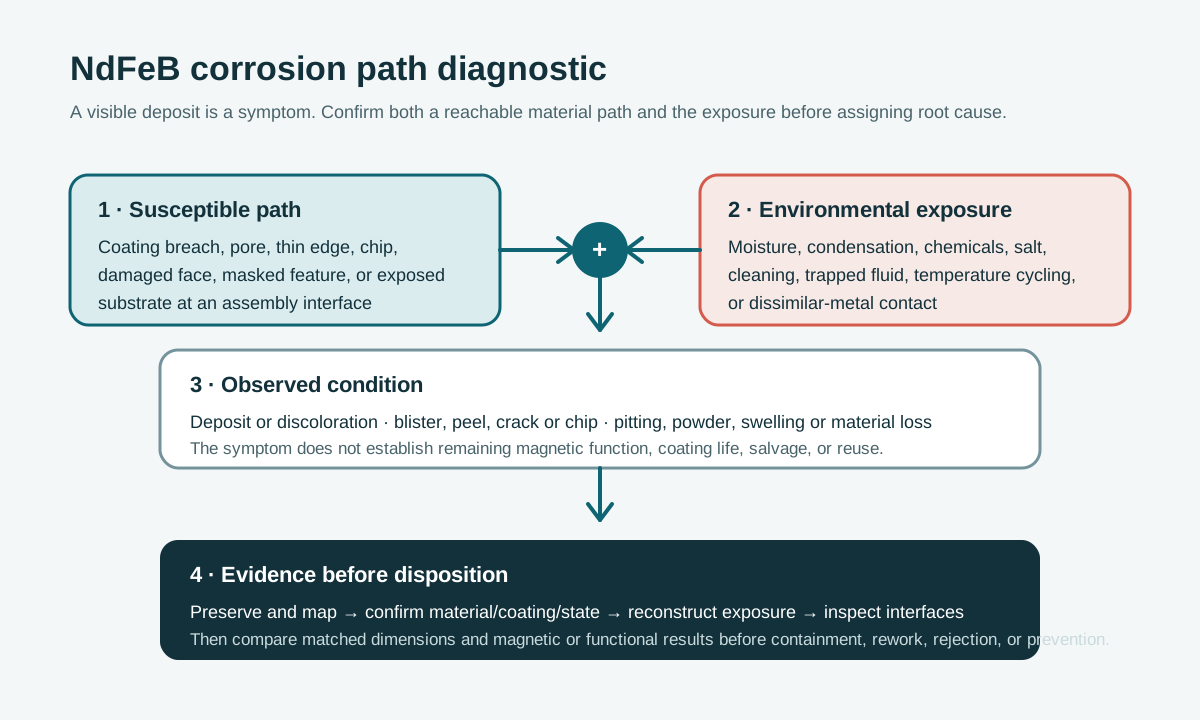
What makes a neodymium magnet rust?
Sintered neodymium-iron-boron magnets are commonly supplied with a selected surface-protection system because moisture and aggressive exposure can attack susceptible material when a path reaches the substrate. The path can begin at a damaged face, chipped corner, porous area, thin edge, machining feature, unprotected contact, or interface that retains fluid.
Visible “rust” is therefore a symptom, not a complete root cause. Brown or dark material can be corrosion product, but deposits can also come from steel fixtures, adhesives, oils, cleaners, packaging, or process residue. Confirm the material, coating, location, and exposure before deciding that the magnet itself is corroding.
Can coated neodymium magnets still rust?
Yes. A coating is a protection system with a defined material, thickness, coverage, adhesion, edge condition, handling history, and validation method. It is not an absolute barrier under every environment. Scratches, impacts, press fits, sharp edges, coating pores, incomplete coverage, abrasive handling, incompatible cleaners, condensation, or trapped fluid can create an exposure path.
The assembly can also change the risk. Adhesive gaps, pockets, seams, dissimilar metals, housings, fasteners, sleeves, or drainage restrictions may retain moisture or create local chemical and galvanic conditions. Review the neodymium magnet coating guide for coating-selection logic and the coating-peeling diagnostic when lift, blistering, or flakes are the main symptom, but diagnose the failed path before changing only the coating name.
Corrosion-path diagnostic tree
| Observed condition | First checks | Evidence to collect | Controlled next decision |
|---|---|---|---|
| Discoloration or deposit only | Cleanliness, process residue, adhesive, oil, packaging, and contact material. | Photos before and after controlled cleaning, location map, exposure history, and material list. | Separate contamination from coating or substrate attack. |
| Blister, peel, crack, chip, or exposed edge | Coating continuity, impact, sharp edges, machining damage, press fit, and handling. | Magnified images, coating and delivery state, drawing edge condition, and assembly history. | Contain affected parts and review protection plus the mechanical cause. |
| Pitting, powder, swelling, or material loss | Moisture path, salt or chemical exposure, trapped fluid, galvanic contact, and temperature cycling. | Environmental history, mating materials, cleaning process, storage or packaging, and dimensions. | Evaluate corrosion extent and whether function or fit changed. |
| Magnetic or assembly performance changed | Air gap, lost material, movement, bond or retention, and comparable test method. | Before-and-after field or functional data at the same condition plus dimensional and assembly evidence. | Decide rejection, deeper analysis, or a controlled engineering trial. |
| Recurrence risk | Exposure, coating choice, edge coverage, drainage, sealing, storage, and inspection. | Drawing, coating specification, acceptance criteria, packaging, and process controls. | Update the complete protection and validation route, not only the coating name. |
What should you do when a neodymium magnet shows rust?
- Isolate the evidence. Separate affected and unaffected parts and record the lot, delivery, assembly, and service state.
- Document before cleaning. Photograph the full assembly, affected locations, edges, interfaces, and representative reference parts with consistent lighting and scale.
- Confirm the supplied state. Record the magnet material, coating, masked or machined features, edge condition, magnetized state, packaging, and storage history.
- Reconstruct the exposure. Capture humidity, condensation, wash or cleaning processes, chemicals, temperature cycles, dissimilar metals, drainage, and trapped-fluid paths.
- Inspect the breach and interfaces. Check impacts, chips, scratches, press or clamp loads, adhesive gaps, retention hardware, seals, and contact regions.
- Compare controlled results. Use matched dimensional, magnetic, and functional conditions before deciding rejection, deeper analysis, rework, or a design-prevention trial.
Prevent additional wet cleaning, scraping, polishing, or destructive handling until the symptom and location are recorded. The sequence helps separate contamination, coating damage, substrate corrosion, lost material, assembly movement, and measurement change without assigning a cause from appearance alone.
Check the coating, edges, and assembly interfaces
Inspect faces, corners, holes, countersinks, machined features, masked regions, contact points, and areas under adhesive or retention hardware. Edge damage matters because brittle magnets can chip during handling or assembly, exposing a path even when broad faces appear intact.
Look for blistering, lifting, flaking, cracks, local discoloration, pitting, powder, or swelling. Map the condition relative to drainage paths, seals, steel components, adhesives, and regions where liquid or condensation could remain. Do not infer coating thickness, adhesion, or porosity from appearance alone; use the agreed inspection method and retained reference parts where available.
Does rust mean the magnet has lost strength?
Not automatically. Early surface contamination or localized coating damage may not create a measurable magnetic change. More advanced corrosion can remove magnetic material, alter dimensions, open the air gap, weaken retention, move the part, or contaminate the assembly. Each of those can change field, force, torque, or sensing performance even when the remaining material has not been irreversibly demagnetized.
Compare affected and reference parts under the same measurement setup, temperature, orientation, air gap, fixture, instrument, and assembly state. If the symptom is reduced output, also use the permanent-magnet strength-loss diagnostic guide so corrosion, damage, movement, heat, and measurement changes remain separate.
Can a rusted magnet be cleaned or reused?
There is no universal reuse answer. Cleaning may remove residue without restoring a breached coating or lost material. Recoating can change dimensions, edges, bonding, cleanliness, and magnetic handling. A part with pitting, swelling, cracks, lost volume, weakened retention, or uncertain contamination may be unsuitable even if it still attracts steel.
Disposition should follow the product risk, extent of attack, dimensional and magnetic evidence, assembly safety, cleanliness requirements, traceability, and approved deviation or rework process. Do not return a part to service from appearance or a simple attraction test alone.
Design and process checks that reduce recurrence
- Define the real environment: humidity, condensation, salt, chemicals, cleaners, temperature cycles, storage, and transport.
- Specify the finished coating state, protected surfaces, edge condition, masking, dimensional allowance, adhesion or appearance needs, and acceptance method.
- Reduce sharp edges, uncontrolled press loads, impacts, abrasion, and contact conditions that can breach protection.
- Review drainage, sealing, adhesive gaps, pockets, dissimilar metals, and interfaces that can trap moisture.
- Use representative coated parts and production assembly processes for environmental and functional validation.
- Keep packaging, cleanliness, handling, inspection, traceability, and change control connected to the released drawing and process.
What to send for corrosion review or an RFQ
Provide the controlled drawing, material and coating definition, finished dimensions and edge conditions, photographs and location map, mating materials, adhesive or retention method, environmental and cleaning history, temperature cycling, packaging and storage conditions, affected quantity, reference parts, and comparable dimensional, magnetic, or functional results. Use the custom sintered NdFeB product route, Custom Capabilities, Quality and inspection planning, and the existing RFQ path.
Sources and evidence boundary
- Arnold Magnetic Technologies: Neodymium Iron Boron Magnets supports the relationship among NdFeB, surface protection, geometry, and application conditions. Arnold-specific values and capabilities are not Elite specifications.
- K&J Magnetics: What Magnet Coating Should I Use? supports application-led coating selection and the absence of one universal coating. Seller-specific products and coating-life claims are not transferred.
- Dura Magnetics: Why Magnets Lose Strength supports separating lost material volume, geometry, heat, and adverse fields. Supplier examples are not Elite test results.
The dated Google US SERP research was used only to identify user questions, symptom vocabulary, page structures, and the gap between a generic “yes, NdFeB rusts” answer and a controlled diagnostic process. EM-FAIL-03 is an original Elite Magnets framework.
Engineering note: A visible corrosion symptom does not establish root cause, remaining magnetic function, coating life, or reuse. Final disposition depends on the actual part, environment, assembly, inspection method, and controlled acceptance evidence.

Frequently asked questions
Why do neodymium magnets rust?
Sintered NdFeB can corrode when moisture or another aggressive environment reaches a susceptible path through a damaged, porous, thin, or unprotected region. The actual exposure and breach must be diagnosed.
Can a coated neodymium magnet still corrode?
Yes. Chips, scratches, pores, thin edge coverage, press-fit damage, trapped moisture, chemicals, cleaning, abrasion, or assembly interfaces can defeat a coating system.
Does visible rust mean the magnet has lost strength?
Not automatically. Compare magnetic or functional results under the same conditions. Advanced corrosion can remove material, change the air gap, weaken retention, or move the part even without irreversible demagnetization.
Can a rusted neodymium magnet be cleaned and reused?
There is no universal reuse answer. Cleaning may remove deposits without restoring breached protection or lost material. Disposition needs dimensional, magnetic, assembly, cleanliness, traceability, and product-risk evidence.
How can corrosion recurrence be reduced?
Define the real environment, finished coating state, edge condition, drainage and sealing, mating materials, cleaning, handling, packaging, inspection, and representative environmental and functional validation.