



Custom neodymium magnets for compact, high-output OEM designs.
Custom neodymium magnets are sintered NdFeB parts made to a controlled drawing for an OEM magnetic function. A useful quotation connects the required field, force, torque, or sensing result with geometry, air gap, temperature, environment, coating, magnetization, assembly, inspection, prototype quantity, annual demand, packaging, and release evidence. Grade alone does not define finished performance or feasibility.
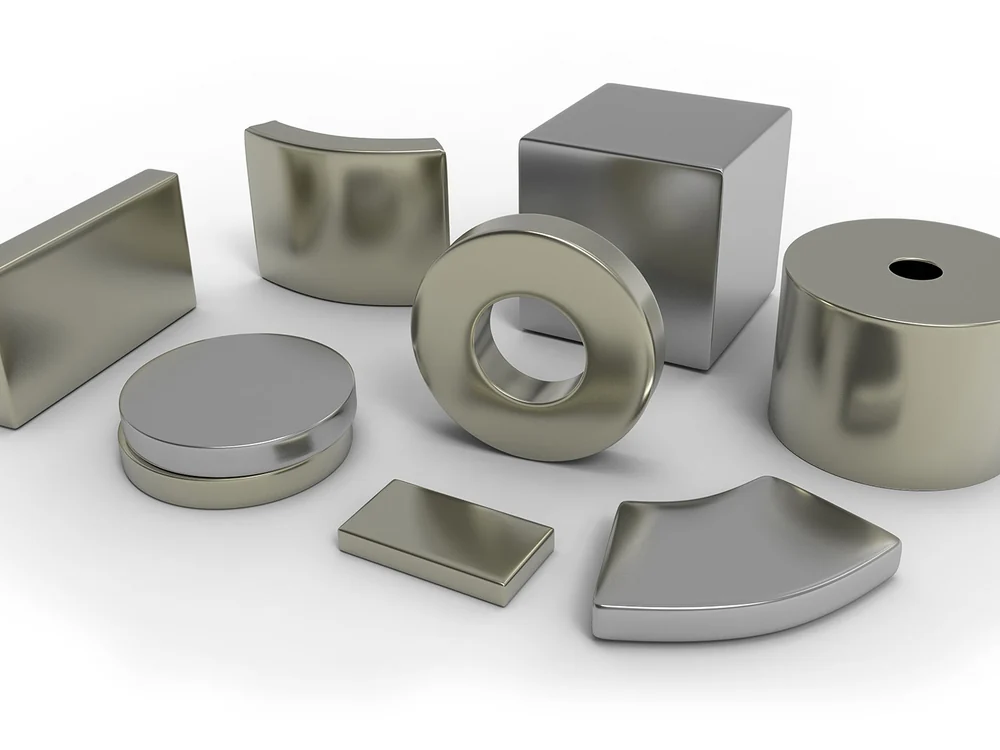
MaterialNeodymium, iron, boron
ProcessSintered rare earth magnet
ShapesBlocks, discs, rings, arcs, segments, assemblies
Main reasonHighest magnetic performance in compact space
Product
Made-to-print custom neodymium magnets for OEM production.
Sintered NdFeB should be evaluated when an OEM part needs maximum magnetic energy density in limited space. A useful custom route begins with drawing review and connects the magnetic circuit, air gap, grade, coating stack, magnetization, assembly interface, inspection method, and repeat-production requirements.
Review custom magnetic engineering and assembly capabilities
Compact size and low weight
Highest magnetic performance in this range
Broad shape and coating options
Where it earns its place
- The design has limited space but needs strong magnetic output.
- The application needs a compact motor, sensor, holding, or rotor magnet.
- The geometry can be machined or assembled from sintered magnet forms.
- Coating, temperature grade, and magnetization direction can be specified clearly.
What the design must manage
- NdFeB is brittle and coating choice must match corrosion exposure.
- Temperature class should be selected before quoting, not after sampling.
- Magnetization direction and assembly fixture can change the manufacturing route.
- Rare earth content, cost, and supply planning should be reviewed for repeat orders.
Custom NdFeB RFQ input card
Use one controlled input set so engineering, sourcing, quality, and the supplier compare the same finished-part requirement.
| Input block | Minimum useful information | Why it changes the review |
|---|---|---|
| Functional target | Field, flux, force, torque, waveform, holding, or sensing result; measurement position and air gap. | Prevents the grade name from replacing the actual product requirement. |
| Controlled geometry | 2D drawing or 3D model, revision, datums, dimensions, tolerances, edges, holes, and interfaces. | Connects machining, coating build, brittle features, assembly, and inspection. |
| Operating envelope | Continuous, peak, fault, assembly, and storage temperature; moisture, chemicals, corrosion, cleanliness, and impact. | Changes grade or coercivity, coating, retention, handling, and validation decisions. |
| Magnetization | Direction, polarity, pole count or pattern, physical reference, delivery state, and inspection characteristic. | Defines fixture feasibility, assembly orientation, and acceptance evidence. |
| Production and quality | Prototype and annual quantity, production stage, inspection plan, traceability, packaging, and timing. | Makes tooling, sampling, repeat supply, and comparable quotation assumptions visible. |
Specification
High output comes with real design choices.
The sintered route creates a dense rare earth magnet with high magnetic alignment. Grade selection should balance output, thermal class, demagnetization margin, coating durability, and any program requirement around heavy rare earth content or recycled material strategy.
Specification should define the operating envelope, not only the grade name.
| Material system | Sintered NdFeB; grade selected by magnetic output, temperature class, and demagnetization margin. |
|---|---|
| Typical forms | Blocks, discs, cylinders, rings, arcs, segments, countersunk magnets, and mounted assemblies. |
| Surface protection | Nickel, epoxy, zinc, or project-specific coating route depending on corrosion, adhesive, and handling. |
| Magnetization | Axial, diametrical, radial, multipole, or fixture-dependent direction depending on the assembly. |
| Engineering risk | Thermal exposure, corrosion, brittle edges, coating thickness, and mechanical impact during assembly. |
Technical Data
Sintered NdFeB grade reference bands.
Use these rows as a specification conversation starter. Final values depend on grade family, tolerance, coating, magnetization fixture, and supplier data sheet.
Download NdFeB grade guide (PDF)
| Grade / Route | Br (T) | Hcj (kA/m) | BHmax (kJ/m³) | Max temp. (°C) | Density (g/cm³) |
|---|---|---|---|---|---|
| N35 | 1.17-1.22 T | >=955 kA/m | 263-287 kJ/m3 | 80 C | 7.5 g/cm3 |
| N42SH | 1.29-1.33 T | >=1592 kA/m | 318-342 kJ/m3 | 150 C | 7.5 g/cm3 |
| N48H | 1.38-1.42 T | >=1353 kA/m | 366-390 kJ/m3 | 120 C | 7.5 g/cm3 |
| N35EH | 1.17-1.22 T | >=2388 kA/m | 263-287 kJ/m3 | 200 C | 7.5 g/cm3 |
Temperature class, geometry, and load line must be checked together before a grade is approved.
Forms and manufacturing scope
Shapes built around the magnetic circuit.
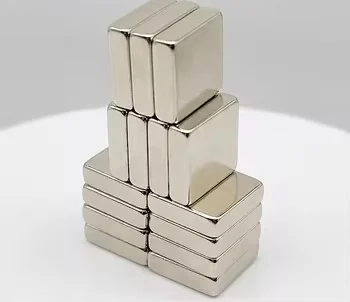
Blocks and bars
For compact fields, holding systems, sensors, fixtures, and custom assemblies.
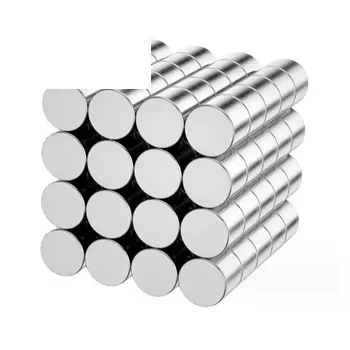
Discs and cylinders
For axial magnetization, couplings, sensors, and compact component interfaces.
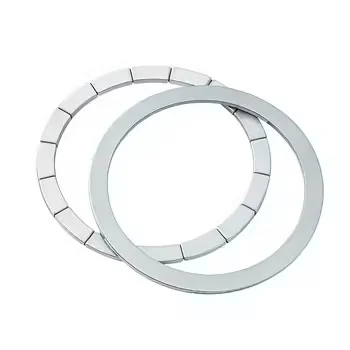
Rings and sleeves
For coaxial assemblies, encoders, pumps, and rotor interfaces.
Application examples
Where compact magnetic power changes the product.

Motors and drive systems
Rotor and segment magnets where torque density and repeatable magnetization matter.

Sensors and encoders
Small magnets with defined direction, tolerance, and magnetic inspection targets.
Holding and fixtures
Blocks, discs, and assemblies where pull force and coating durability need to align.
Engineering guides
Resolve the decisions that shape this material route.
Use these guides before the drawing, grade, coating, magnetization, or inspection plan becomes expensive to change.
Neodymium Magnet Grades
Choose a grade around the operating envelope instead of treating the highest N-number as the default.
Read the guideMagnet Coercivity Explained
Separate Hcb and Hcj, then connect coercivity to the actual temperature, working point, reverse field, and validation method.
Read the guideMagnet Demagnetization by Heat
Diagnose apparent or irreversible loss by aligning measurement, thermal history, circuit, damage, and assembly evidence.
Read the guideN35 vs N52 Neodymium Magnets
Compare useful output, temperature margin, geometry, supply, and validation before increasing the grade number.
Read the guideNeodymium Magnet Coating Types
Connect surface protection with exposure, bonding, handling, and finished dimensions.
Read the guidePermanent Magnet Dimensional Tolerances
Define tolerances around function, coating state, geometry, process, and inspection method.
Read the guideFrequently asked questions
Custom neodymium magnet RFQ questions
What information is needed to quote a custom neodymium magnet?
Provide the useful magnetic result, drawing or model and revision, dimensions and tolerances, operating temperature and environment, coating and assembly conditions, magnetization definition, inspection method, prototype and annual quantities, timing, packaging, and release evidence.
Can a custom NdFeB magnet be selected from the grade name alone?
No. Grade is one input. Geometry, air gap, magnetic circuit, temperature, adverse fields, coating, magnetization, assembly, and the agreed functional or magnetic test determine whether the finished part is suitable.
Does Elite Magnets publish a standard MOQ or lead time for custom NdFeB parts?
No universal MOQ or lead time is stated because tooling, material, geometry, coating, magnetization, inspection, quantity, packaging, and production stage change the quotation and schedule.
Should magnetization be defined on the drawing?
Yes. Define direction, polarity, pole count or pattern where applicable, physical reference, delivery state, and the magnetic inspection characteristic so tooling, assembly, and acceptance use the same intent.
What is reviewed before a custom NdFeB part is released?
The review should align the controlled drawing, material and coercivity intent, manufacturing route, coating, magnetization, assembly interfaces, inspection plan, representative samples, traceability, packaging, and agreed change control.
Related product routes