



Magnetic measurement troubleshooting
Low Magnet Surface Field: Measurement and Part Variables to Check
Direct answer: A low surface-field or gauss reading is not a diagnosis until the measurement matches the released reference. Freeze the physical face, coordinate, probe direction, distance, fixture, temperature, instrument state and loose or assembled condition. Then compare geometry, magnetization direction, pole position, nearby steel, damage history and a known accepted part before assigning material or supplier cause.
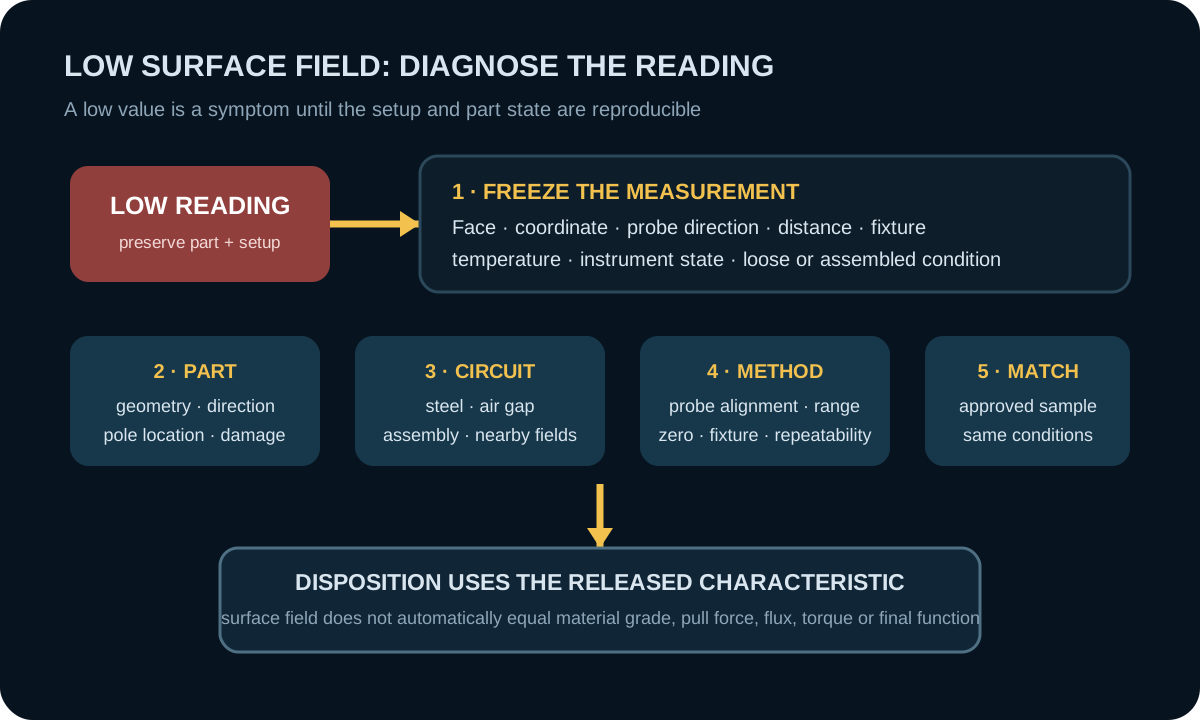
Preserve the part and freeze the setup
Quarantine the suspect part or assembly without grinding, re-magnetizing, disassembling or changing the fixture. Record the drawing revision, lot, material or approved sample reference, measurement instrument, probe orientation, measurement face and coordinate, distance or controlled contact condition, temperature, nearby steel and whether the reading was taken loose or in the final assembly.
A surface-field measurement is local. Moving the probe away from the surface, across an edge, off the magnetic axis or into a different vector direction can change the reported component even when the magnet itself has not changed.
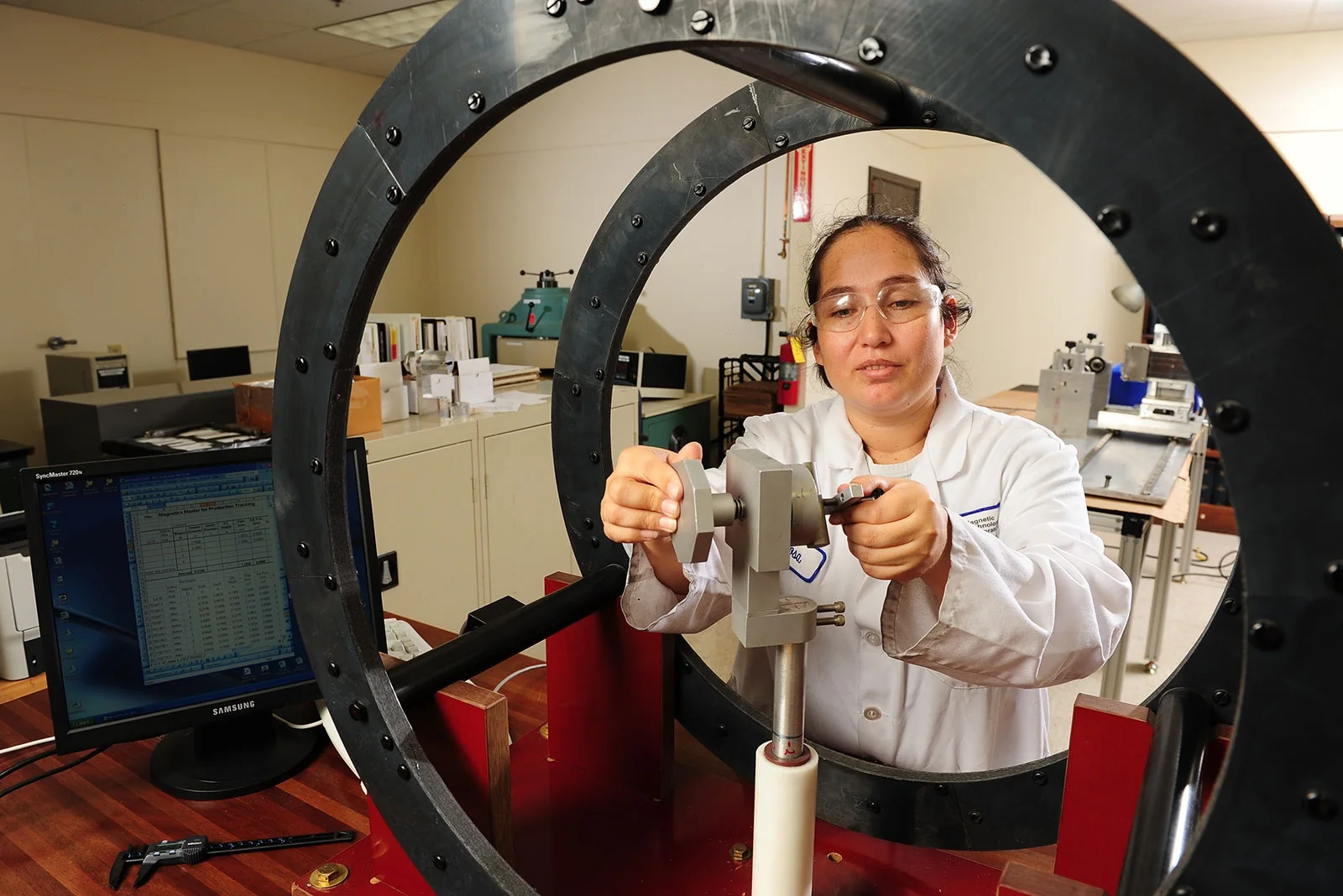
Low-field diagnostic matrix
| Possible variable | Matched check | Evidence to retain | Do not conclude yet |
|---|---|---|---|
| Probe position or direction | Repeat at the released coordinate and vector orientation | Photo, fixture ID, path and raw result | The magnet is weak |
| Probe distance or air gap | Use the same spacer, contact rule or controlled height | Distance definition and setup record | Material grade is wrong |
| Geometry or edge location | Compare dimensions, orientation and the same point on an accepted part | Drawing revision and dimensional result | The whole lot is demagnetized |
| Magnetization direction or polarity | Verify the pole map and physical datum | Direction record and master comparison | Low Br caused the reading |
| Nearby steel or assembly state | Compare loose-to-loose or assembled-to-assembled | Assembly configuration and air-gap record | One state represents the other |
| Instrument or fixture condition | Check zero, range, alignment and repeatability with a known reference | Instrument ID, check result and operator/station | The part alone caused the change |
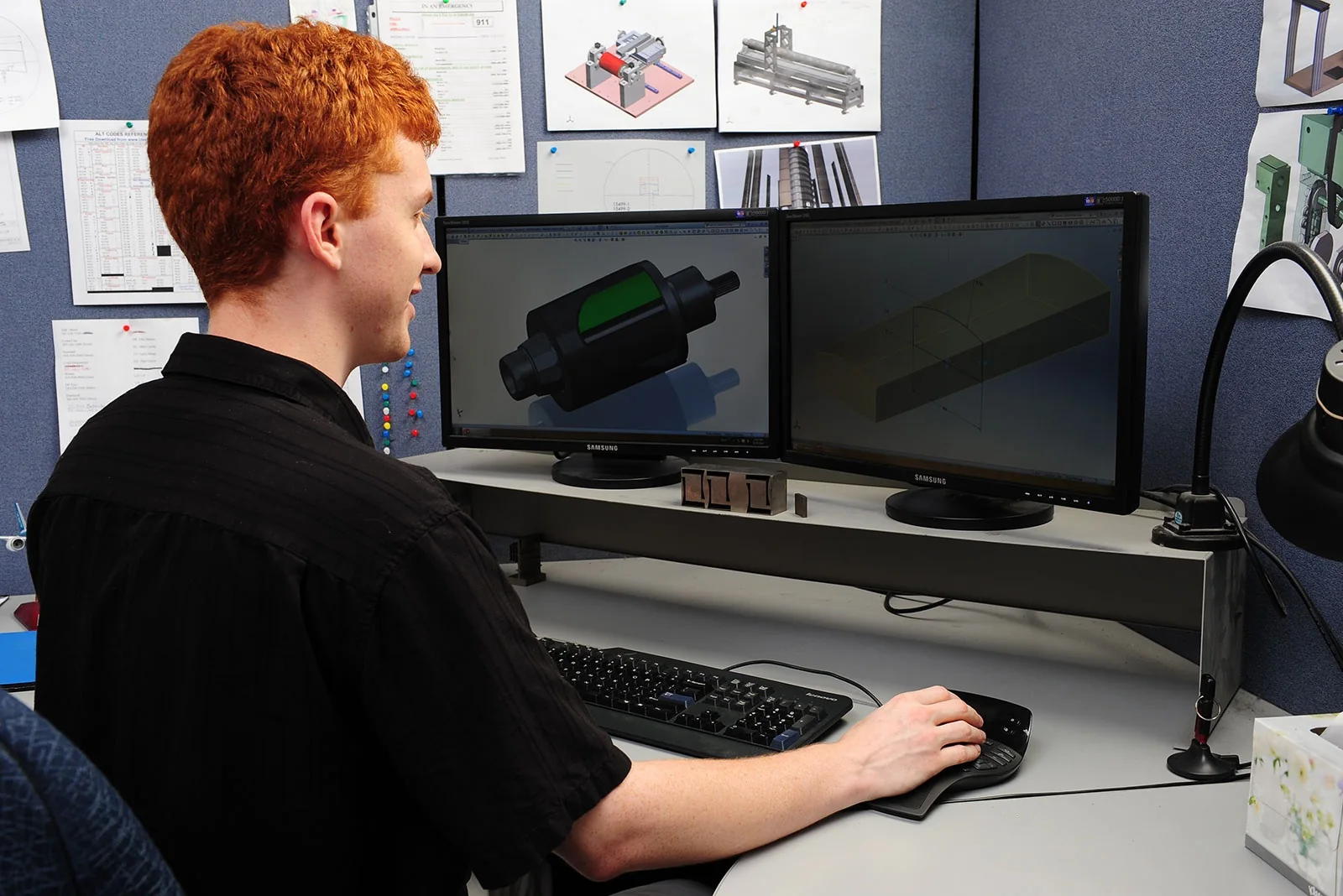
Part and circuit variables that can change the result
Useful surface field depends on more than a material label. Review the actual dimensions, magnetization direction, pole location, material and coercivity family, magnetizing condition, temperature history, cracks or lost volume, coating or assembly damage, air gap, surrounding steel, adjacent magnets and any reverse field exposure. A changed geometry or circuit can alter the measured field without proving a change in bulk material.
If heat or adverse fields are credible events, preserve the exposure history and compare the part under the same working condition. The demagnetization curve guide and remanence guide explain why one material property cannot be converted directly into one finished surface-field value.

Compare like for like, then protect the function
Use a known accepted part, the same instrument, fixture, coordinate, direction, temperature and assembly state. Repeat the measurement enough to separate setup variation from a stable part difference. If the protected function is pull force, air-gap flux, torque, waveform or sensor switching, use the released functional method rather than assuming that one surface reading is a complete substitute.
An escalation record should include the drawing and revision, lot, part state, instrument and fixture, exact coordinate or path, probe direction and distance, temperature, raw results, accepted reference, dimensional and visual findings, event history and disposition. Review permanent magnet inspection methods, Quality, and submit the controlled evidence through the existing RFQ form.
Frequently asked questions
Why is my gauss reading lower than the datasheet value?
A material datasheet value and a finished-part surface reading are different characteristics. Geometry, direction, position, distance, circuit, temperature and method must match.
Does a low surface-field reading mean the magnet is demagnetized?
No. It can also result from setup, orientation, geometry, assembly steel, air gap, damage or instrument conditions. Compare a matched accepted reference first.
How far should the probe be from the magnet?
Use the distance or controlled contact condition defined by the released method. There is no universal height that makes unrelated measurements comparable.
Can steel near the magnet change a gaussmeter reading?
Yes. Nearby ferromagnetic material can change the magnetic circuit and local field distribution, so loose and assembled readings must not be mixed.
Can surface field predict pull force?
Not by itself. Pull force also depends on geometry, pole area, gap, mating steel, alignment and the test method. Use the released functional characteristic.
Source and evidence boundary
The dated Google SERP and directly read surface-field education pages were used for measurement vocabulary and content coverage. No competitor calculator output, product value, material limit, force conversion, equipment specification or Elite capability claim was adopted.
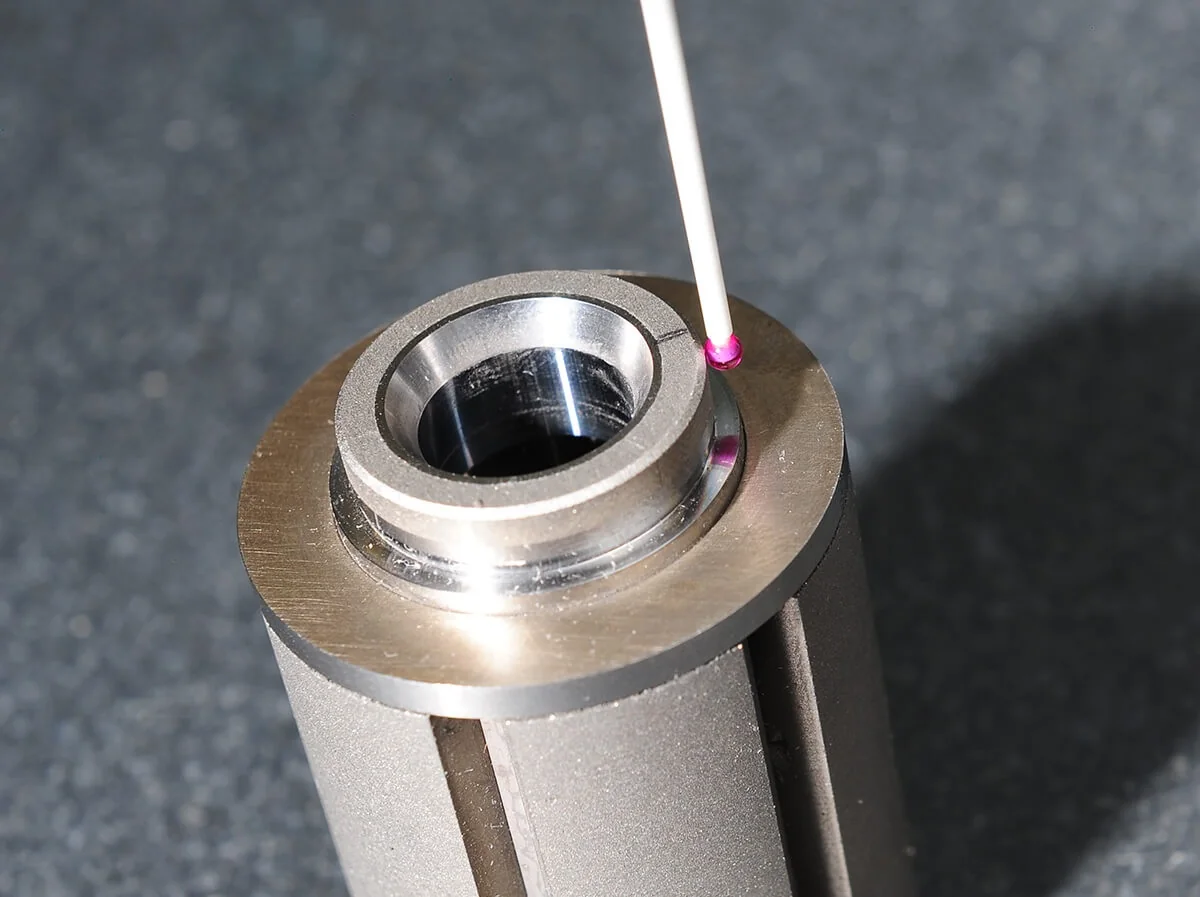
Frequently asked questions
Why is my gauss reading lower than the datasheet value?
A material datasheet value and a finished-part surface reading are different characteristics. Geometry, direction, position, distance, circuit, temperature and method must match.
Does a low surface-field reading mean the magnet is demagnetized?
No. It can also result from setup, orientation, geometry, assembly steel, air gap, damage or instrument conditions. Compare a matched accepted reference first.
How far should the probe be from the magnet?
Use the distance or controlled contact condition defined by the released method. There is no universal height that makes unrelated measurements comparable.
Can steel near the magnet change a gaussmeter reading?
Yes. Nearby ferromagnetic material can change the magnetic circuit and local field distribution, so loose and assembled readings must not be mixed.
Can surface field predict pull force?
Not by itself. Pull force also depends on geometry, pole area, gap, mating steel, alignment and the test method. Use the released functional characteristic.